

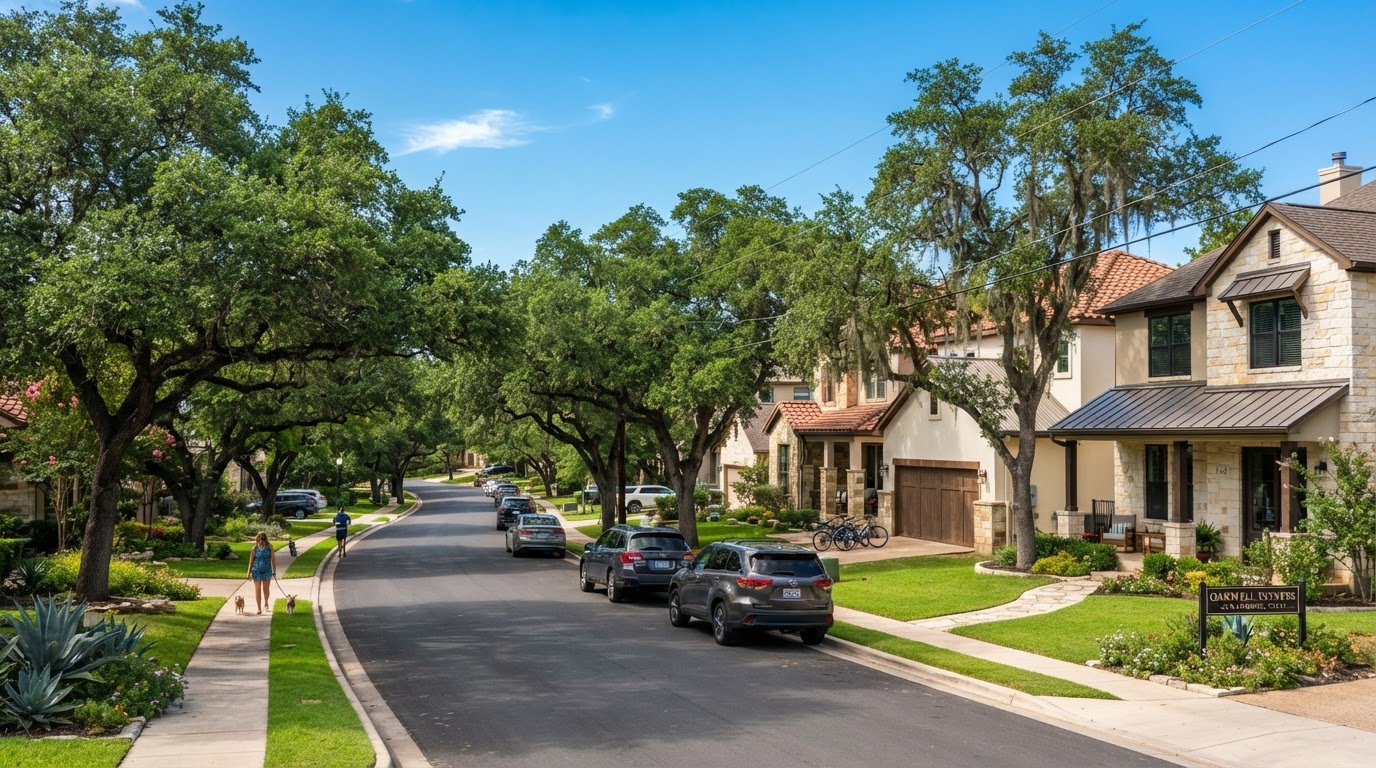
If you're a San Antonio buyer sitting on the sidelines because you think you need 20% down, this article is for you. And if you're a realtor whose clients keep saying "we'd love to buy, but we don't have the down payment" — this is for you, too. The truth is that in today's San Antonio market, zero-down and low-down options are not just alive, they're some of the most powerful tools we have to get good buyers into homes.
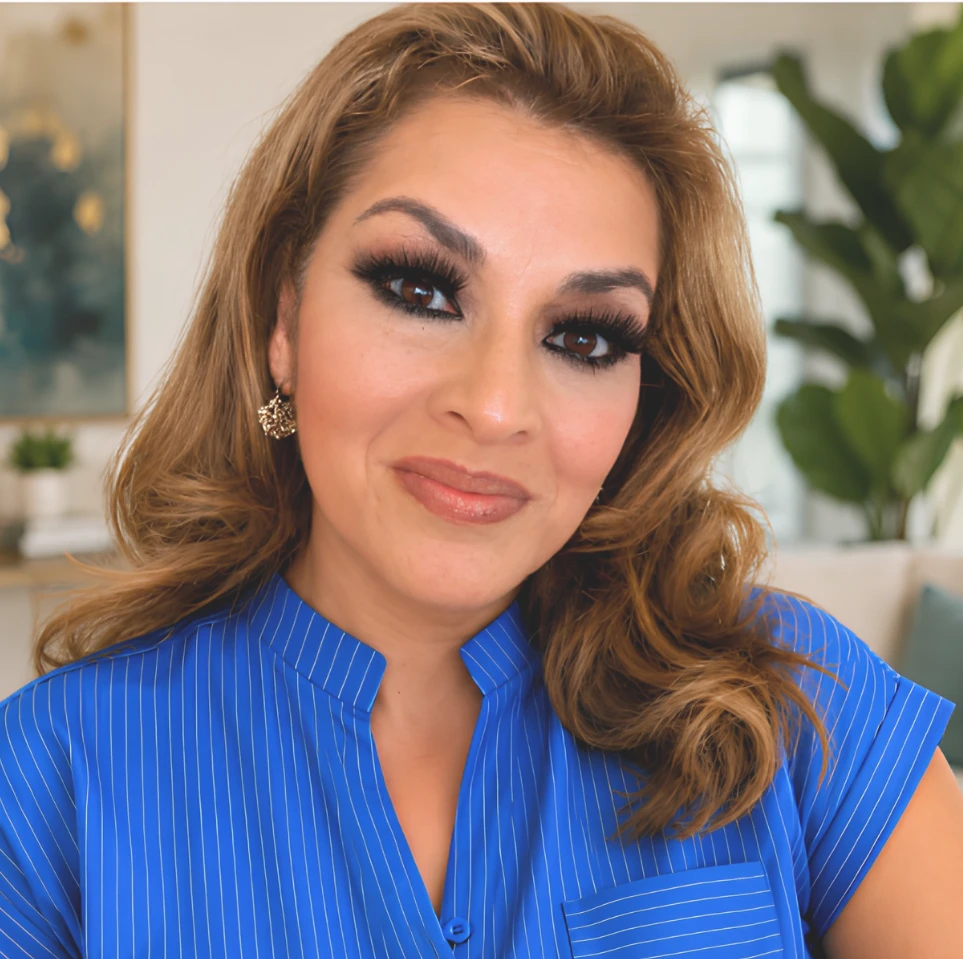
I'm Irene Galindo-Cantu, a San Antonio Sr. Mortgage Loan Originator known as The Lady Lender. Let me walk you through exactly which programs work for you and how to actually get to the closing table with as little cash as possible, with Smarter Lending and Smoother Closings.
Where the San Antonio Market Stands Right Now
San Antonio has stayed one of the more affordable major Texas metros, but prices have crept up and rates have been anything but predictable. The median home price in Bexar County still sits well below Austin and Dallas, which keeps our market attractive to first-time buyers — but it also means competition for the well-priced homes under $350k is real. When a good listing hits, it moves.
That's exactly why down payment is the wrong thing to focus on. The buyers winning in this market aren't the ones with the biggest savings account — they're the ones whose loan officer had the right program identified, the pre-approval in hand, and the cash-to-close mapped before the showing. Cash to close, not down payment, is what actually keeps buyers up at night. And cash to close is something we can engineer.
Here's the part most buyers don't hear: with the right combination of a zero-down loan, down-payment assistance, and seller-paid closing costs, a buyer's required cash at closing can potentially be reduced significantly. Let me show you the pieces.
Zero-down refers to the loan's down-payment requirement and does not necessarily mean a buyer will have no out-of-pocket costs. Closing costs, prepaid items, earnest money, inspections, appraisal costs, and other expenses may still apply.
The Zero-Down Toolkit I Use Every Day
"Zero-down" isn't one loan — it's a toolkit of programs, each with its own rules. Here are the five I reach for most in our market, and exactly how they work.
Program availability, assistance amounts, rates, income limits, property requirements, credit standards, and eligibility are subject to change and applicable underwriting requirements. Not all borrowers or properties will qualify.
VA Loans
$0 downMilitary City USA — active-duty, veterans, and eligible surviving spouses.
- $0 down, no monthly mortgage insurance.
- Funding fee 2.15% on first use with less than 5% down, 3.3% on later use — can be financed into the loan.
- Certain borrowers are exempt from the VA funding fee, including qualifying Veterans receiving or eligible to receive compensation for a service-connected disability and certain other eligible borrowers.
- Pair VA with TSAHC or SETH to help with closing costs.
USDA Loans
$0 downBuyers purchasing in eligible areas just outside the city.
- $0 down in eligible areas. Most of the San Antonio city core is NOT eligible.
- Areas to look at: Converse, Floresville, Castroville, Lytle, Hondo, Poteet, Pleasanton, and the outer edges of Cibolo, Schertz, Seguin, New Braunfels and Boerne.
- Eligibility goes by address, not city name.
- Income limits count the whole household.
- Lower mortgage insurance than FHA.
Texas State Programs
Up to 5% DPATSAHC and SETH are two statewide down-payment-assistance options I frequently evaluate alongside eligible VA, USDA, FHA, and conventional financing.
TSAHC
Home Sweet Texas & Homes for Texas Heroes
- Up to 5% of the loan amount.
- Grant never repaid, second lien forgiven after 3 years, or deferred second lien repaid when you sell or refinance.
- Heroes = teachers, police, firefighters, EMS, corrections officers, veterans and active military, nursing faculty.
- Home Sweet Texas = everyone else who meets income limits.
- Minimum credit confirmed at application.
- Homebuyer education required.
SETH 5 Star Texas Advantage
- Up to 5% of the loan amount.
- Second lien forgiven after 3 years or 30-year deferred option repaid when you sell or refinance.
- Any income-eligible buyer.
- 640 middle score.
- Homebuyer education required for one borrower.
Neither requires being a first-time buyer. A grant or 3-year forgivable lien rewards buyers who plan to stay — sell or refinance early and a forgivable lien can come due.
San Antonio & Bexar County Programs
Local DPACity of San Antonio HIP 80
- First-time buyers at or below 80% AMI.
- $1,000 to $30,000 as a 0% second lien with no monthly payments. Under current City guidelines, assistance up to $15,000 is forgiven over five years; above $15,000 and up to $30,000, over ten years.
- Home inside city limits at or under $260,000 existing or $284,000 new construction.
- Must pass a city property review.
- 8-hour HUD-approved class; at least $500 earnest money.
City of San Antonio HIP 120
- First-time buyers at 81% to 120% AMI with smaller amounts.
NHSSA
- Assistance up to the amount approved by NHSSA for first-time buyers anywhere in Bexar County.
- Provided as a second mortgage, with terms set by NHSSA.
- Credit and income requirements apply.
Income, property, purchase-price, homebuyer-education, inspection, and other program requirements apply. Program availability and funding are subject to change.
The Option Most Buyers Have Never Heard Of
Additional optionThrough certain Edge approved lenders.
- Through certain lending partners, qualifying borrowers may have access to FHA-compatible assistance programs with structures that differ from traditional second-lien DPA.
- Depending on the program, assistance may be provided without a repayable second lien, and some programs may use different income or underwriting criteria.
- Availability, pricing, qualification requirements, and program terms vary by lender and are subject to change.
- Trade-off is usually a slightly higher rate — Irene shows both side by side.
The Myths That Keep Good Buyers on the Sidelines
Before we get into the mechanics, let's clear out the noise. These are the four things I hear almost every week — and every one of them is costing people a home.
You need 20% down or you can't buy.
This is the single most common reason buyers sit on the sidelines. 20% avoids mortgage insurance on a conventional loan — it is not a requirement to buy a home. Many first-time buyers may qualify for financing requiring substantially less than 20% down, including programs with down-payment requirements ranging from 0% to 3.5% for eligible borrowers.
Zero-down loans have terrible rates.
VA and USDA rates are typically competitive with — and sometimes below — conventional. The 'penalty' for low down is usually mortgage insurance, not a sky-high rate, and even that can be managed.
Assistance programs are only for low-income buyers.
Income limits are higher than most people expect, and some assistance options may use different income limits.
Sellers won't accept a zero-down offer.
Sellers care about certainty, not down payment size. A fully reviewed pre-approval can make a zero-down buyer substantially more competitive than the loan type alone might suggest. The quality of the pre-approval and execution can matter as much as the loan type.
How to Actually Get a Buyer in with Little Down
Knowing the programs is half the battle. The other half is sequencing them correctly. Here's the process I walk every zero-down buyer through before we ever go look at a house.
Get pre-approved, not just pre-qualified
A real pre-approval (with credit pulled and income/assets reviewed) signals to listing agents that your buyer is serious. In a market where sellers compare offers fast, this is the difference between a showing and a pass.
Match the program to the property
Run the address early. A USDA-eligible home in Floresville and an in-town FHA condo have completely different financing. Knowing the program before you write the offer prevents last-minute scrambles.
Combine your assistance wisely
Certain DPA programs may be combined with VA, USDA, FHA, or conventional financing when both the first mortgage and the assistance program permit the combination. The art is matching the right grant to the right loan and the right buyer's income — that's where most 'zero-down' deals are actually won or lost.
Negotiate seller concessions
In today's San Antonio market, sellers are increasingly open to covering closing costs. Combined with a zero-down loan, that can potentially reduce the buyer's required cash at closing.
"The deal isn't won by the buyer with the most cash. It's won by the buyer whose loan officer knew which program fit the house — before the offer was written."
Seller Concession Limits Every Agent Should Know
Seller-paid closing costs are one of the levers that can potentially reduce a zero-down buyer's required cash at closing — but every loan type caps how much the seller can chip in. Here are the limits I work to.
The Zero-Down Buyer Readiness Checklist
You don't need to figure out if you're "ready" alone. Run through this list with me — if most of these are in place, you're closer to a front door than you think.
- Pull a real credit report and review it together — not just a score, the full picture.
- Gather 2 years of W-2s/tax returns and recent pay stubs (or LES for military).
- List all monthly debts so we can calculate true buying power, not a guess.
- Decide on a comfortable monthly payment — not the max you 'qualify' for.
- Get a full pre-approval with credit, income and assets reviewed.
- Map eligible programs to the neighborhoods you're actually considering.
- Plan earnest money, appraisal, and inspection costs up front.
- Time the offer around any DPA funding windows if assistance is in play.
Free interactive checklist: find your zero-down path, then check off every step.
Get the Zero-Down ChecklistWhat This Means for San Antonio Realtors
If you're working with buyers in the $250,000–$400,000 range, it's worth screening them for available low-down-payment and assistance programs before assuming cash-to-close will keep them from buying. The single highest value thing you can do is connect them with a local loan officer early, before they've talked themselves out of buying.
When you bring me a buyer, here's what you get: a full pre-approval with credit, income and assets reviewed, a clear map of which programs fit which homes, and a real cash-to-close number — not a guess. That's how we turn a hesitant lead into a closed file.
Send the lead before they're 'ready'
Your 'not-ready-yet' leads are often one conversation from ready. A 15-minute call mapping their programs can turn a maybe into a buyer this quarter.
Ask for a full pre-approval
When you bring me a buyer, you get a full pre-approval with credit, income and assets reviewed — not a pre-qual based on stated income. That's the letter listing agents trust.
Run the address before the offer
Before you write, send me the listing. I'll tell you which programs fit, what the cash-to-close looks like, and whether DPA timing is a factor.
Negotiate concessions with confidence
I'll give you a real number for seller-paid closing costs that keeps the loan within limits — so you can ask for the right amount without killing the deal.
Common Questions I Get from Buyers and Agents
Is zero-down really possible in San Antonio right now?+
Yes — for buyers who fit the program. VA and USDA offer true zero-down, and FHA plus down-payment assistance can get a buyer in with very little cash. The key is matching the buyer to the right program early.
Do zero-down loans have higher rates?+
Not necessarily. VA and USDA rates are typically competitive with — and sometimes below — conventional. FHA carries mortgage insurance, but for the right buyer it's still the most accessible path to ownership.
Can a buyer really get to closing with very little cash?+
It depends. A zero-down loan, down-payment assistance, and seller-paid closing costs can potentially reduce the buyer's required cash at closing. Earnest money, inspections, appraisal costs, prepaid items, and other expenses may still apply, so I map the full cash-to-close up front.
How fast can a buyer close on a zero-down loan?+
Typically 30–45 days, same as conventional. The variable is assistance funding cycles — if a buyer is relying on a specific DPA grant, we time the contract around when those funds open.
What credit score do I need for a zero-down program?+
VA and USDA don't have a hard minimum set by the agency, but most lenders want around 580–620. FHA starts at 580 for 3.5% down. The real answer is program-specific, and I'll tell you exactly where you stand on the first call.
Can I use assistance if I've owned a home before?+
Often, yes. Several Texas DPA programs are open to repeat buyers, not just first-timers. 'First-time buyer' is defined more loosely than people think — if you haven't owned a primary residence in the last three years, you usually qualify.
The Bottom Line
Zero-down isn't a gimmick and it isn't a thing of the past. In San Antonio, with the right program, the right property, and a loan officer who knows how to put the pieces together, buyers may be able to get into homes with significantly less cash at closing than they expected. If you're a buyer, the first move is a conversation. If you're a realtor, the first move is sending me your next "not-ready-yet" lead — I'll show you they're more ready than they think.
Which options may fit you?
Find out which zero-down or low-down options may fit your situation.
Start the conversationBefore you write the offer
Send me the property address before you write the offer, and I'll help identify financing and assistance considerations.
Send me the address